Logbook Servicing
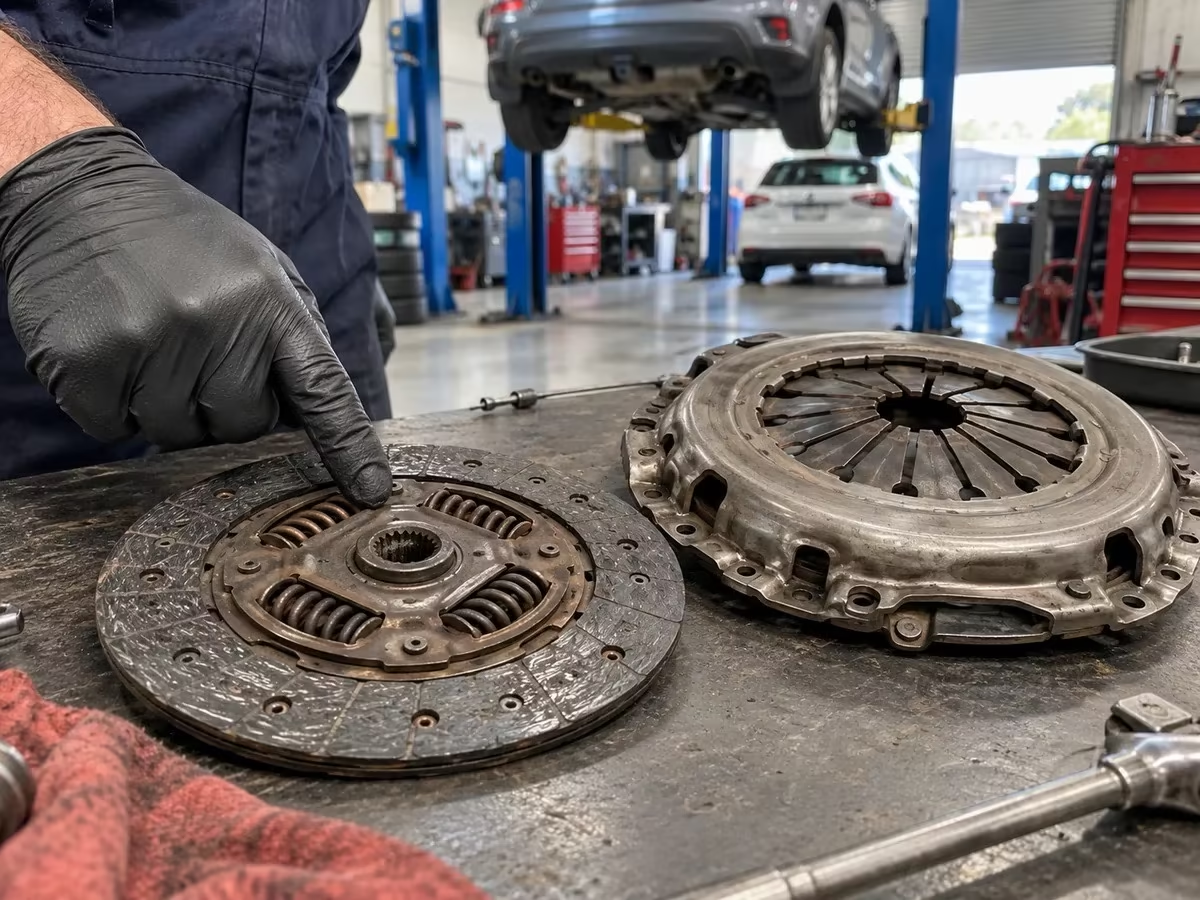
Your clutch is the bridge between your engine and gearbox, allowing you to smoothly change gears and control power delivery to the wheels. Every time you press the pedal, the clutch disc engages and disengages from the flywheel, and over hundreds of thousands of cycles, that friction material wears down.
Wear speeds up with aggressive driving, towing heavy loads, riding the clutch pedal, or constantly driving in stop-start traffic. Understanding what wears your clutch helps you develop kinder driving habits, but even careful drivers will eventually need a replacement after 80,000 to 160,000 kilometres depending on driving style and conditions.
Clutch slipping is often the first sign of trouble. You'll notice the engine revs climbing higher than normal without the vehicle accelerating as it should, or you might feel a slight lag when pulling away from a stop. In severe cases, you may smell burning rubber or friction material as the worn clutch struggles to grip the flywheel.
Slipping typically happens under load—when accelerating uphill, towing, or merging onto a highway. If your vehicle feels sluggish or the rev counter spikes without matching power delivery, don't ignore it. Early intervention keeps the problem isolated to the clutch; ignoring it can allow heat and friction to damage the flywheel and transmission bell housing, turning a $1,500 job into a $5,000 repair.
A strong burning smell coming from beneath your vehicle, especially during gear changes or uphill acceleration, is a red flag. This acrid, almost electrical smell signals extreme friction and overheating of the clutch plate. Don't push through it—continued use will only accelerate wear and risk thermal damage to surrounding components.
Difficulty shifting gears is another warning sign. If you're having to force the gear stick or experiencing grinding or crunching sounds when changing gears, your clutch may not be fully disengaging. This can also indicate low clutch fluid (in hydraulic systems) or a problem with the clutch release bearing. A soft or spongy clutch pedal that doesn't return firmly is another clue worth investigating immediately.
Catching clutch wear early is an investment in your vehicle's longevity and your wallet. A worn clutch that slips generates excessive heat, which can warp or glaze the flywheel and cook the gearbox oil, leading to transmission failure. Once that damage occurs, you're looking at extensive overhauls rather than a straightforward clutch replacement.
If you notice any of these signs—slipping, burning smell, spongy pedal, or rough gear changes—book a service with a qualified mechanic right away. A professional inspection can determine whether your clutch is simply wearing normally or heading for imminent failure. At R.P. Automotive Service, we can check your clutch health during routine servicing and give you honest advice on how much life remains before replacement becomes necessary.